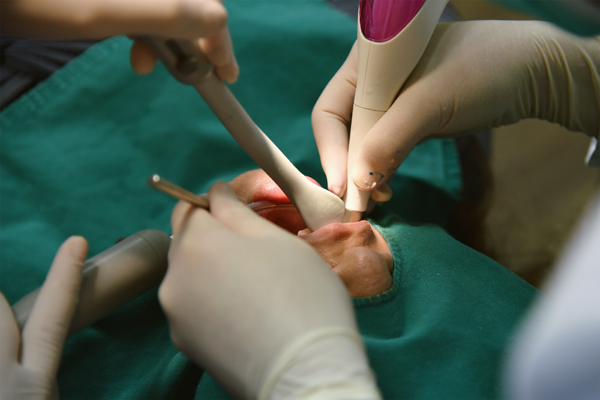
Oral surgery involves incisions, excisions, and sutures to the structures of the mouth, some of them in or around the teeth. Some oral surgeries are as common as wisdom tooth extraction. Others are as complex as cleft palate repair.
The specialists that perform oral surgery
The number and variety of dental surgical procedures point to specialization. For example, periodontists are the go-to specialists for gum flap surgeries. Endodontists handle surgical procedures that treat the inner tooth. Then there are the oral and maxillofacial surgeons who fix problems that range from dental implant surgery to lump removal to the surgical correction of jaw fractures. Fortunately, general dentists can also perform minor oral surgeries in the following situations:
Tooth extraction
A general dentist extracts teeth all the time. These extractions range from badly damaged incisors or canines to molars. Sometimes the teeth that a general dentist extracts are partially erupted due to obstruction from teeth, gum tissue, or bone.
In such cases, a general dentist may make small incisions into the gum. These small surgical cuts allow the dentist to grip the partially erupted or impacted tooth to pull it out. The dentist may have to go a step further and remove any obstruction to the problem tooth.
There are patients with painful wisdom teeth that either grow horizontally or sit under layers of gum and bone. Extracting such teeth requires surgery to expose the tooth. Surgery may involve opening the gums as well as a layer of the jawbone. A general dentist will refer such patients to an oral surgeon.
Root canals
General dentists perform plenty of root canals. However, not all root canal procedures are made equal. Some patients have straightforward root canal anatomies that allow a general dentist to access and remove all infection in the inner tooth. The success rate for such patients is high.
Other patients have complex root canal anatomies that increase the likelihood of failure. That is where an endodontist or oral surgeon steps in to perform intensive procedures like the apicoectomy. Removing the tips of tooth roots is a more complex procedure that requires a specialist. It then follows that a general dentist will refer patients with complex tooth root anatomies to the appropriate specialist.
Dental implant surgeries
The placement of dental implants requires the placement of small, biocompatible screws in the jawbone. These screws connect to abutments, which in turn connect to dental restorations or prosthetics.
Dental implant surgery is a fairly intensive oral surgery that is usually the preserve of oral surgeons and periodontists. However, some general dentists pursue in-career training that equips them with the skills and knowledge to install dental implants.
This means that it is possible to find a general dentist with the skill to place dental implants. Prospective patients judge the skill level of such dentists based on the dentist’s list of happy patients.
A general dentist points you in the right direction
Before oral surgery becomes a prospect, you will need an accurate diagnosis. You will also need an explanation of all your treatment options. This is where our general dentist comes in. Our dentist has years of experience in the diagnosis and treatment of oral health problems. Make an appointment to find if oral surgery is the approach that can help restore your smile.
Request an appointment here: https://www.selmasunshinedental.com or call Selma Sunshine Dental at (559) 257-4080 for an appointment in our Selma office.
Check out what others are saying about our dental services on Yelp: Oral Surgery in Selma, CA.
Related Posts
When a sudden toothache or injury occurs, an emergency dentist provides the necessary intervention to save a smile before you experience permanent damage or worsening pain. Dental emergencies often arise without warning. They require an experienced dental professional who can manage immediate trauma with precision and expertise to restore your comfort and long-term dental health.Dental…
A new dental filling restores tooth structure, and smart aftercare helps it last. Understanding the importance of care and maintenance after you get a new filling can significantly improve your dental health and overall well-being. The following tips can help you maintain optimal oral hygiene to protect and extend the lifespan of your dental fillings. Patients…
For patients missing most or all of their teeth, implant-supported dentures provide a stable, natural-looking way to restore a full smile. This approach anchors a custom denture to dental implants placed in the jawbone for improved support. Within this category, patients often choose between fixed and removable designs. Understanding how each option works helps patients…
Dental veneers can improve the shape, color, or symmetry of the smile in a way that looks natural. These thin restorations are bonded to the front of the teeth to enhance appearance while maintaining a natural feel. Available in both composite and porcelain materials, veneers are selected based on aesthetic goals, treatment timeline, and lifestyle.Composite…